Water pipe work is one of those renovation items most homeowners pay little attention to — until a leak appears six months later. Understanding the basics of how pipes are connected can help you ask the right questions and make sure your plumber is using the right method for your home.
The two most common pipe connection types used in Singapore HDB and condo renovations are compression fittings and push-fit (tool-free) fittings.
Compression Fittings
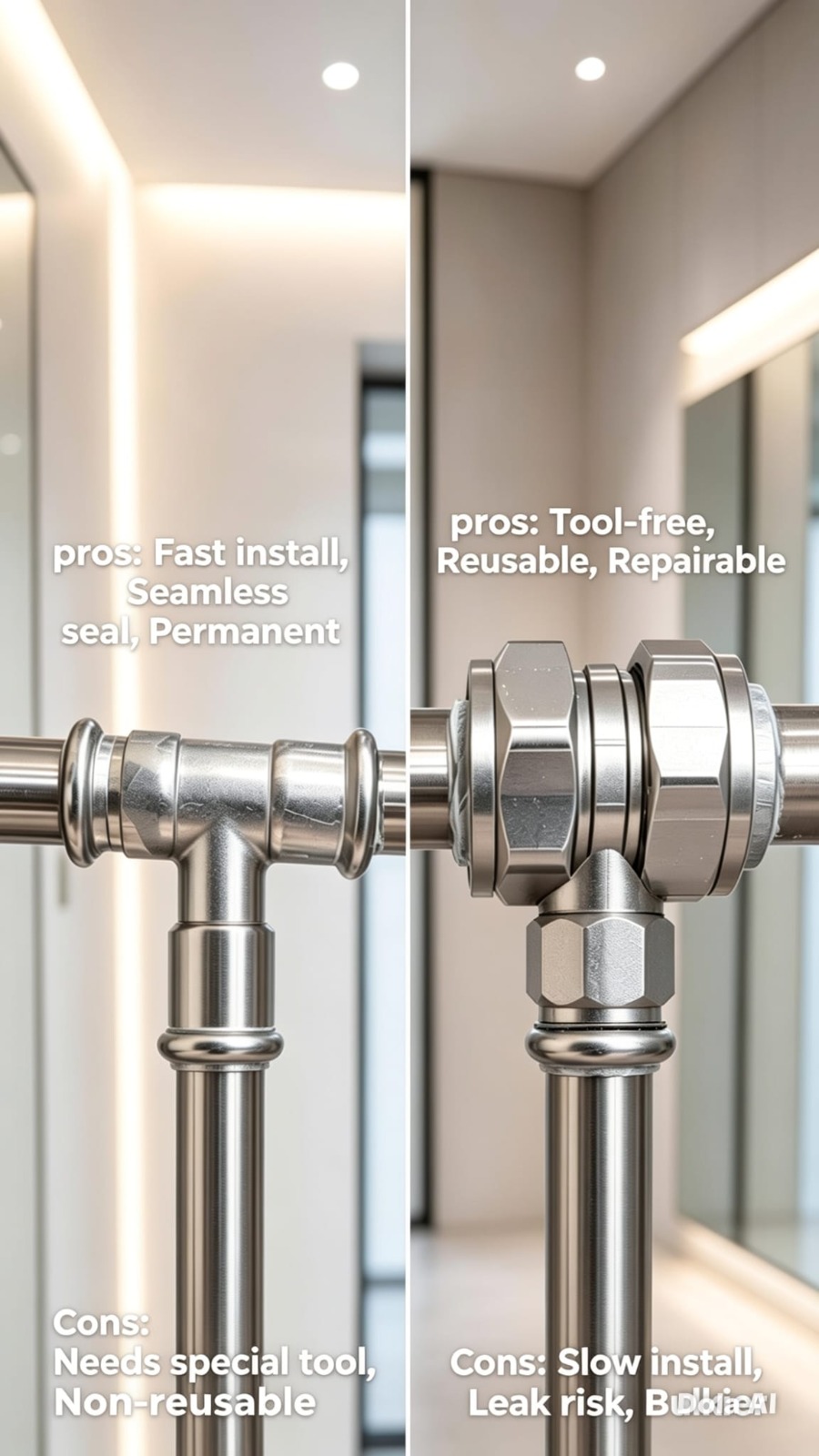
Compression fittings have been the industry standard for decades. They use a nut and a small ring (called a ferrule or olive) that compress around the pipe when tightened, creating a watertight seal.
Pros of Compression Fittings:
- Fast installation — a skilled plumber can make connections quickly
- Creates a seamless, permanent seal when done correctly
- Suitable for a wide range of pipe materials and sizes
Cons of Compression Fittings:
- Requires torque tools for proper tightening — over or under-tightening leads to leaks
- Not easily repositioned once tightened — the ferrule deforms permanently
- If done by an unskilled worker, risk of hairline leaks that only appear months later
Push-Fit (Tool-Free) Fittings
Push-fit connectors are a modern innovation — you simply push the pipe into the fitting and an internal grab ring locks it in place instantly. No tools, no threading, no compression.
Pros of Push-Fit Fittings:
- Tool-free installation — significantly reduces labour time
- Reusable and repositionable — fittings can be released and reconnected
- Repairable — easier to service if access is needed in future
- Consistent seal quality — less dependent on individual worker skill
Cons of Push-Fit Fittings:
- Higher cost per fitting compared to compression
- Must be used with compatible pipe types — not universal
| Compression Fittings | Push-Fit Fittings |
| Requires tools & torque | Tool-free, quick install |
| Permanent — not repositionable | Reusable & repositionable |
| Skill-dependent seal quality | Consistent seal regardless of skill |
| Lower cost per fitting | Higher cost per fitting |
| Long-established method | Modern, increasingly preferred |
Why This Matters For Your Home
The connection method matters most in concealed areas — pipes hidden behind walls or under cabinets where a slow leak can go undetected for months. In these situations, a more reliable, consistent connection method reduces your long-term risk.
When discussing plumbing with your ID or contractor, ask specifically about what fitting type they use for concealed pipework, and whether the plumber is a licensed PUB-registered plumber. This protects you legally and practically.
Have questions about your renovation?
Chat with us on WhatsApp and get expert advice from My Reno Studio — no obligation, just honest guidance.